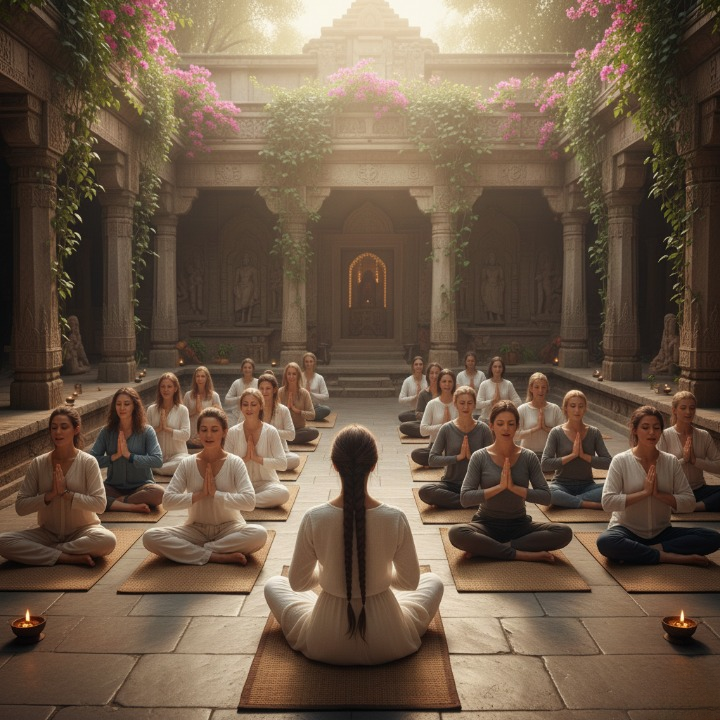
The session begins with a prayer, often a Sanskrit mantra invoking an enlightened teacher (like Patanjali) or a deity, or simply stating an intention, serving to root the entire practice in the selfless intention of collective harmony, protection, and universal peace.
• Setting Intention (Sankalpa): The prayer's primary role is to set a spiritual intention and attitude of reverence. It shifts the mind away from daily concerns and ego-driven goals ("I want to do a perfect headstand") toward the loftier goal of Yoga: union with the Divine or the True Self.
• Humility and Surrender (Īśvara Praṇidhāna): By invoking a teacher or higher power, the practitioner embodies the Niyama of Īśvara Praṇidhāna (Surrender to a Higher Power). This act of humility acknowledges that the success of the practice is not solely due to personal effort but relies on grace and cosmic support.
• Creating Sacred Space: The vibratory quality of the mantra purifies the immediate environment, establishing a sacred container (maṇḍala) for the inner work, signaling to the mind that a dedicated, profound activity is beginning.
• Mind-Body Connection: Chanting a prayer—especially one that is familiar—triggers a calm, focused state. It uses the frontal lobe for language processing while the rhythmic, repetitive nature engages the parasympathetic nervous system, signaling to the body that it is safe to relax and focus deeply.
• Focused Attention: The effort required to pronounce the Sanskrit sounds with correct intonation acts as a vibrational warm-up for the vocal cords and the respiratory system, priming them for the deep breathing and sustained vibrations required in the later stages of Prāṇāyāma and Dhyāna.