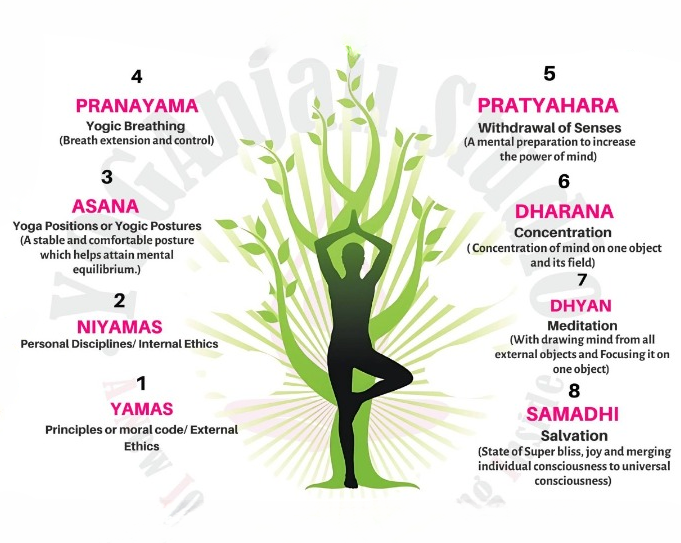
Ashtanga Yoga, meaning "eight limbs," is a systematic spiritual and psychological discipline detailed in Patanjali's Yogasutras, which outlines a rigorous, internal path intended to restrain the modifications of the mind (citta-vṛtti-nirodhaḥ), leading to the realization of one's true, unchanging nature (Puruṣa). The first five limbs (Yama, Niyama, Āsana, Prāṇāyāma, and Pratyāhāra) constitute the external aids (bahiraṅga-sādhana) focusing on ethical conduct, physical health, and control of the life force and senses, establishing the necessary foundation for the final three, more internal limbs (Dhāraṇā, Dhyāna, and Samādhi), collectively called antaraṅga-sādhana. The culmination of this entire practice is Samādhi, the state of profound absorption where the mind is completely tranquil and the distinction between the subject (the seeker) and the object (the focus of meditation) dissolves, ultimately leading to Kaivalya (absolute freedom and liberation from suffering). The path of Ashtanga Yoga, as outlined by Patanjali, begins by establishing a strong ethical and moral foundation through the Yamas and Niyamas, which purify the practitioner's conduct and inner world.
1. Yama (Ethical Restraints)
Yama consists of five moral disciplines:
Ahimsa (non-violence): Living in a way that avoids causing harm to any being — including yourself — through your thoughts, words, or actions.
Satya (truthfulness): Living with authenticity and honesty in your thoughts, words, and actions — expressing what is true without exaggeration, distortion, or pretense. Showing off or pretending to be something you are not creates inner conflict, weakens trust, and distances you from your real self.
Asteya (non-stealing): Asteya: Not taking what is not yours — whether it is things, time, credit, or opportunities. It simply means being honest and fair, and respecting what belongs to others.
Brahmacharya (moderation of desires): Managing your physical, emotional, and mental energies wisely through balance, restraint, and mindful living.
Aparigraha (non-possessiveness) :Letting go of greed and possessiveness, freeing yourself from excessive attachment to people, objects, or outcomes.
Spiritually, Yama purifies one’s relationship with the external world, dissolving karmic disturbances and harmonizing the individual with universal consciousness. It refines ego-driven impulses and cultivates compassion and integrity.
2. Niyama (Personal Observances)
Saucha: (cleanliness; purity of body, mind, and surroundings)
Keeping yourself and your environment clean while also clearing negative thoughts and emotions. It creates clarity, lightness, and positive energy within.
Santosha: (contentment; being satisfied and grateful for what you have)
Accepting life as it is without constant complaining or comparing. It brings inner peace and lasting happiness.
Tapas: (austerity; disciplined effort; inner heat of transformation)
It means willingly accepting challenges and practicing self-control to purify and strengthen yourself.
Through consistent discipline and simplicity, it builds inner power and spiritual growth.
Svadhyaya: (self-study; reflection and learning about your true nature)
Observing your thoughts, habits, and behavior honestly. It helps you understand yourself and grow wisely.
Ishvara Pranidhana: (surrender to a higher reality; trusting and dedicating actions to the divine or universal truth)
Doing your best and leaving the results to a higher power. It reduces ego, stress, and brings deep trust in life
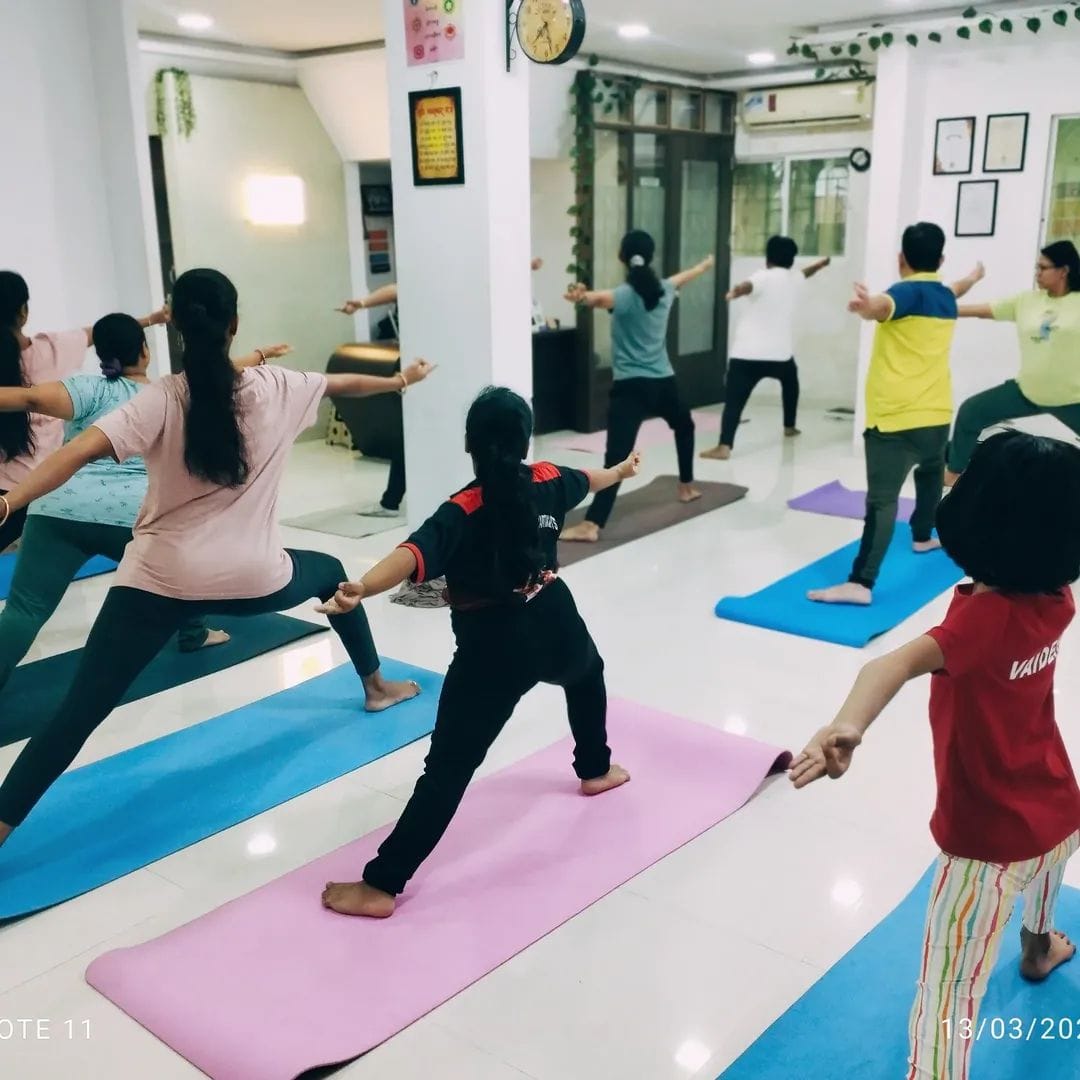
3.Asana (Posture)
Asana refers to steady and comfortable posture. Spiritually, it stabilizes the body so that energy (prana) can flow freely and meditation can occur without physical disturbance. It transforms the body into a vehicle for higher consciousness.
4.Pranayama (Breath Regulation)
Pranayama is the conscious control of breath. Spiritually, it expands and regulates prana (life force), cleansing subtle energy channels (nadis) and awakening higher states of awareness. Breath becomes a bridge between body and mind, leading toward stillness.
5.Pratyahara (Withdrawal of Senses)
Pratyahara is the withdrawal of senses from external objects. Spiritually, it marks the turning point from outer to inner exploration, detaching consciousness from sensory distractions and reducing attachment. It prepares the mind for deeper concentration.
6.Dharana (Concentration)
Dharana means focused concentration on a single object, mantra, or point of awareness. Spiritually, it gathers scattered mental energies into one stream, reducing mental fluctuations (chitta vritti) and preparing the mind for meditation.
7.Dhyana (Meditation)
Dhyana is uninterrupted meditation — a continuous flow of awareness toward the chosen object without distraction. Spiritually, it deepens self-awareness and dissolves the illusion of separateness between observer and observed. It cultivates profound inner peace and insight.
8.Samadhi (Absorption or Enlightenment)
Samadhi is the culmination where the meditator merges with the object of meditation, transcending ego and experiencing unity consciousness. Spiritually, it is liberation (moksha), the realization of pure awareness beyond mind and body. It dissolves karmic impressions and reveals ultimate truth.