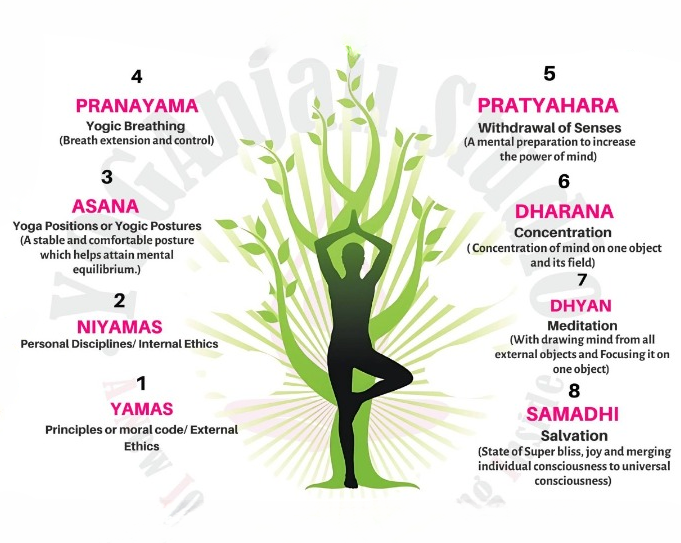
Ashtanga Yoga, meaning "eight limbs," is a systematic spiritual and psychological discipline detailed in Patanjali's Yogasutras, which outlines a rigorous, internal path intended to restrain the modifications of the mind (citta-vṛtti-nirodhaḥ), leading to the realization of one's true, unchanging nature (Puruṣa). The first five limbs (Yama, Niyama, Āsana, Prāṇāyāma, and Pratyāhāra) constitute the external aids (bahiraṅga-sādhana) focusing on ethical conduct, physical health, and control of the life force and senses, establishing the necessary foundation for the final three, more internal limbs (Dhāraṇā, Dhyāna, and Samādhi), collectively called antaraṅga-sādhana. The culmination of this entire practice is Samādhi, the state of profound absorption where the mind is completely tranquil and the distinction between the subject (the seeker) and the object (the focus of meditation) dissolves, ultimately leading to Kaivalya (absolute freedom and liberation from suffering). The path of Ashtanga Yoga, as outlined by Patanjali, begins by establishing a strong ethical and moral foundation through the Yamas and Niyamas, which purify the practitioner's conduct and inner world.
🙏 Yama – The Five Restraints
- Ahimsa – Non-violence
- Satya – Truthfulness
- Asteya – Non-stealing
- Brahmacharya – Right use of energy
- Aparigraha – Non-possessiveness
✨ Niyama – The Five Observances
- Śauca – Purity
- Saṃtoṣa – Contentment
- Tapas – Self-discipline
- Svādhyāya – Self-study
- Īśvara Praṇidhāna – Surrender
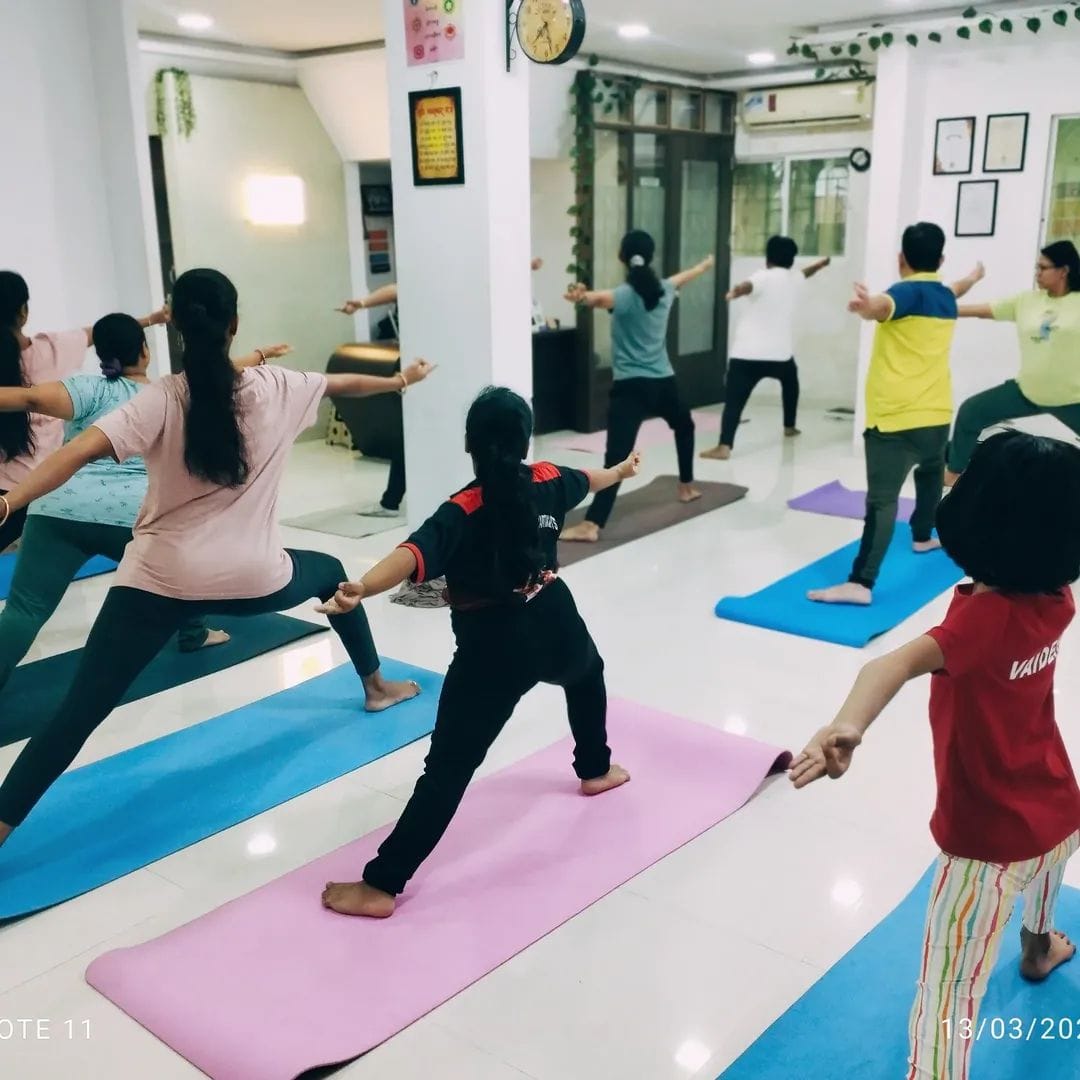
🤸 Āsana
Defined as "Sthira Sukham Āsanam", posture should be steady and comfortable, preparing the body for deeper meditation.
🌬️ Prāṇāyāma
Regulation of breath purifies the nadis and calms the nervous system, bridging external and internal practices.
👁️ Pratyāhāra
Withdrawal of the senses from external objects allows awareness to turn inward.
🎯 Dhāraṇā → 🧠 Dhyāna → 🌟 Samādhi
These final limbs represent deep concentration, effortless meditation, and complete absorption leading to Kaivalya — absolute freedom.